
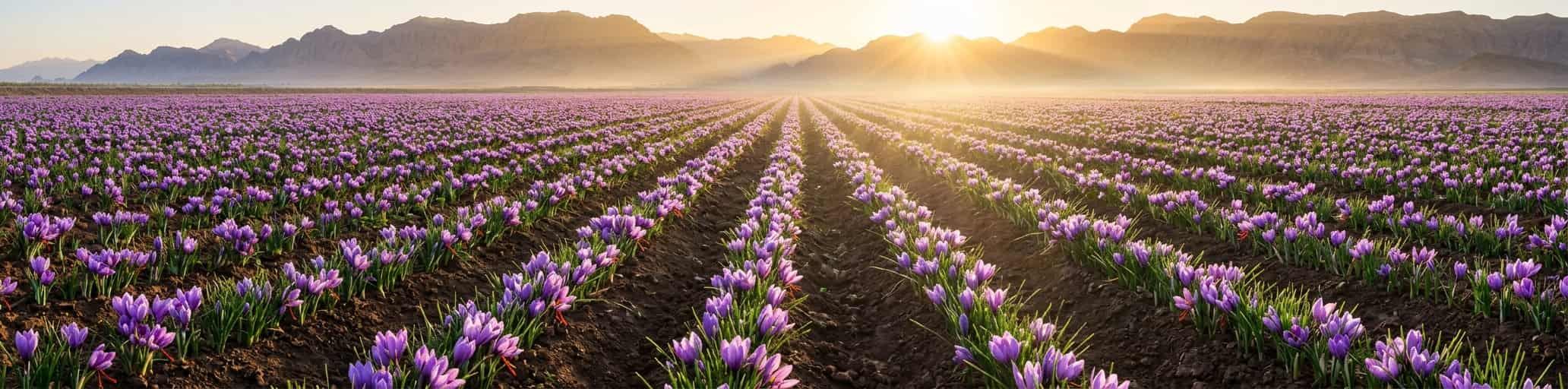
The Saffron Guide
Everything a buyer needs to know about saffron: how the grades differ, how quality is measured, how to spot the real thing, how to use it and what to check before you import.
Everything you need to know about saffron
Go straight to the topic you need: types, quality, spotting fakes, health, uses, export and wholesale packs.
Select a topic to jump to it.
Types of saffron and how they differ
Saffron is graded by which part of the thread is used and how it is prepared. The same crop gives several grades.
Negin
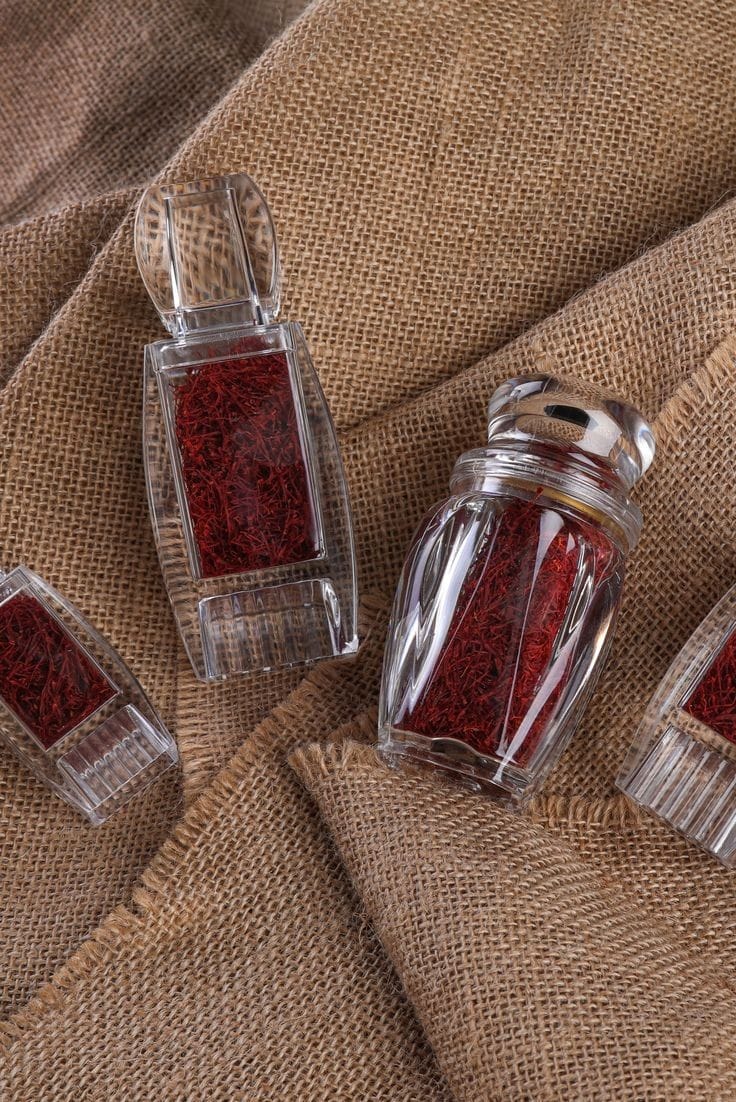
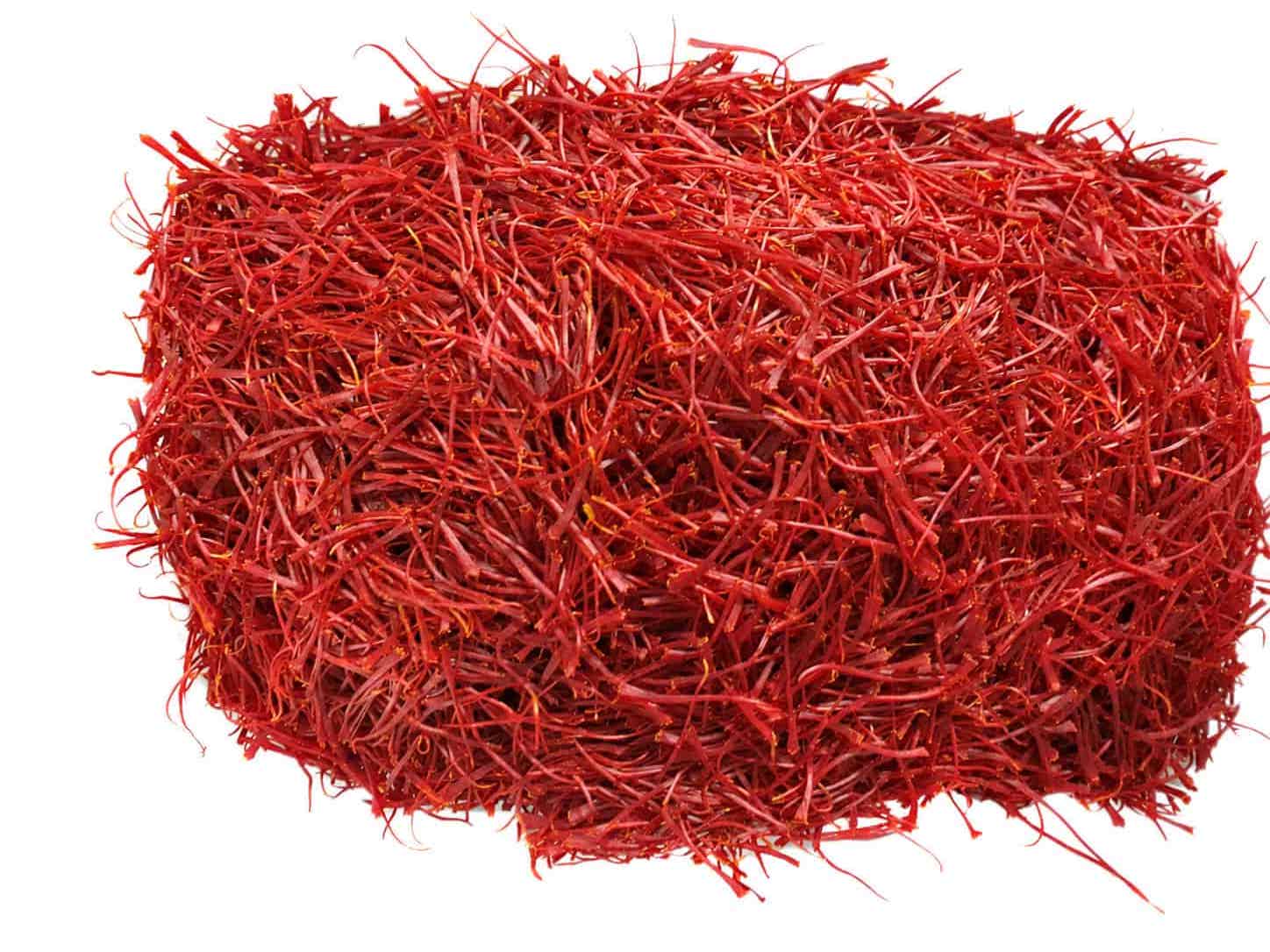
The longest, thickest, deep-red threads. It is the premium grade, prized for its look and strength, and the usual choice for retail packs, gifting and export.
Sargol
Only the red tips of the threads, cut short, with no yellow part. It gives very strong colour per gram and is widely used in kitchens and food factories.
Pushal
Red threads that still carry a small pale yellow-cream part of the style. Colour per gram is lower, which makes it a practical, economical grade.
Dasteh (bunch)
Threads tied together with the style attached, the most complete form of the spice. It is mostly sold for traditional use and is easy to inspect by eye.
| Type | Appearance | Colouring strength | Best for |
|---|---|---|---|
| Negin | Longest, thickest, all-red threads | Very high | Premium retail, gifting, fine cooking |
| Sargol | Short red tips only, no yellow | High to very high | Food manufacturing, everyday cooking |
| Pushal | Red threads with a little pale style attached | Medium | Economical cooking, blends |
| Dasteh (bunch) | Threads bundled together with the style | Medium to low | Traditional use, easy visual check |
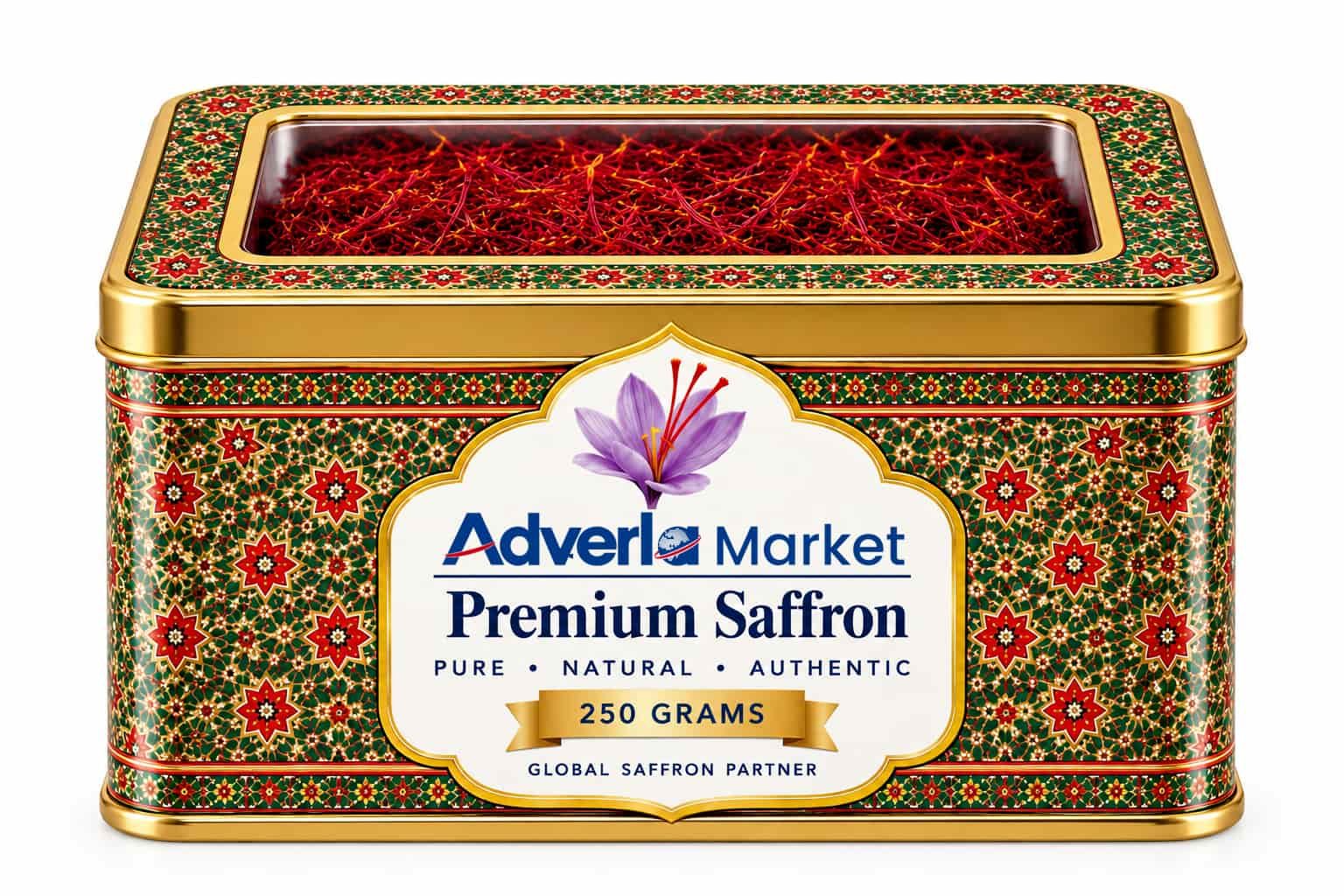
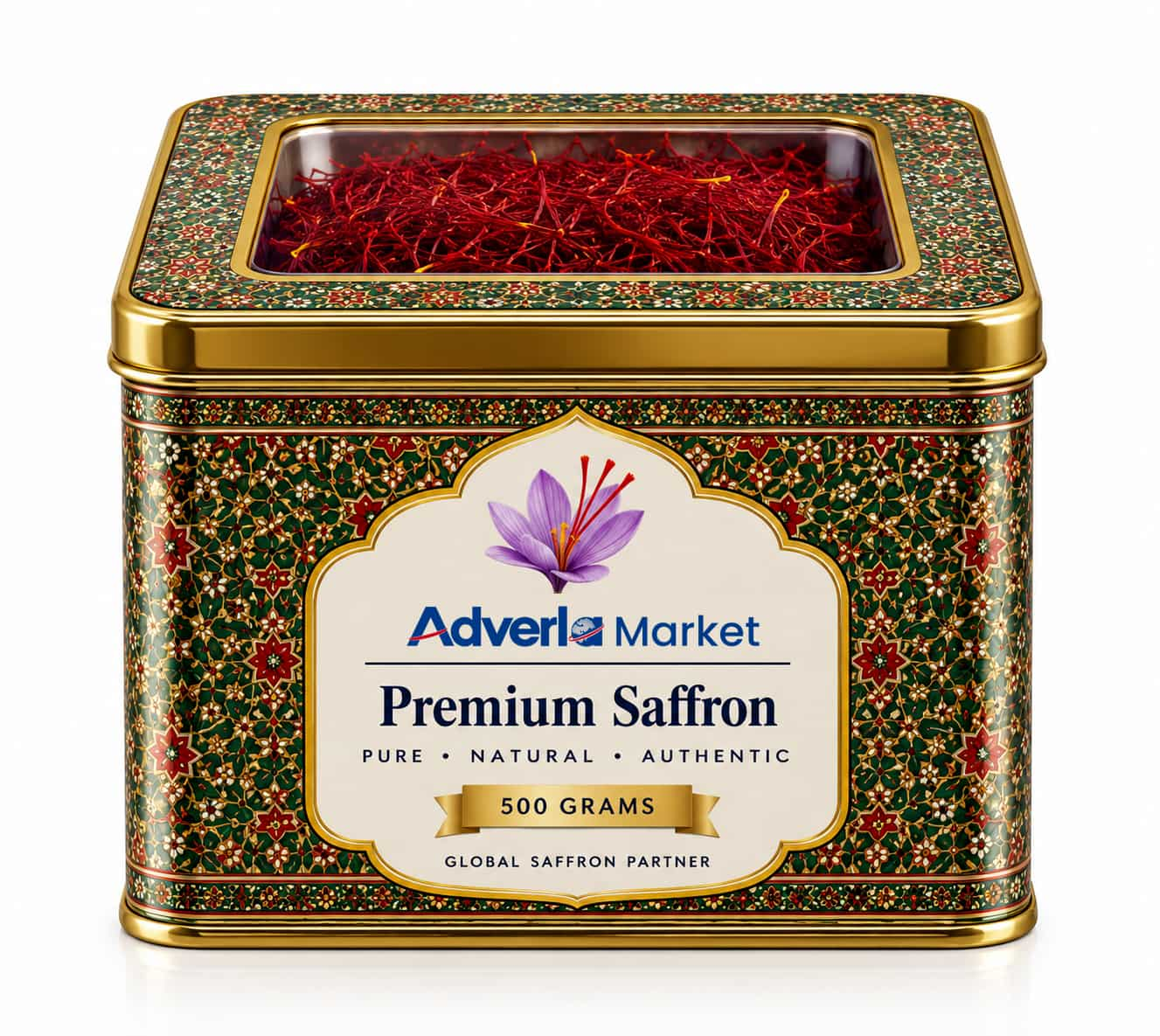
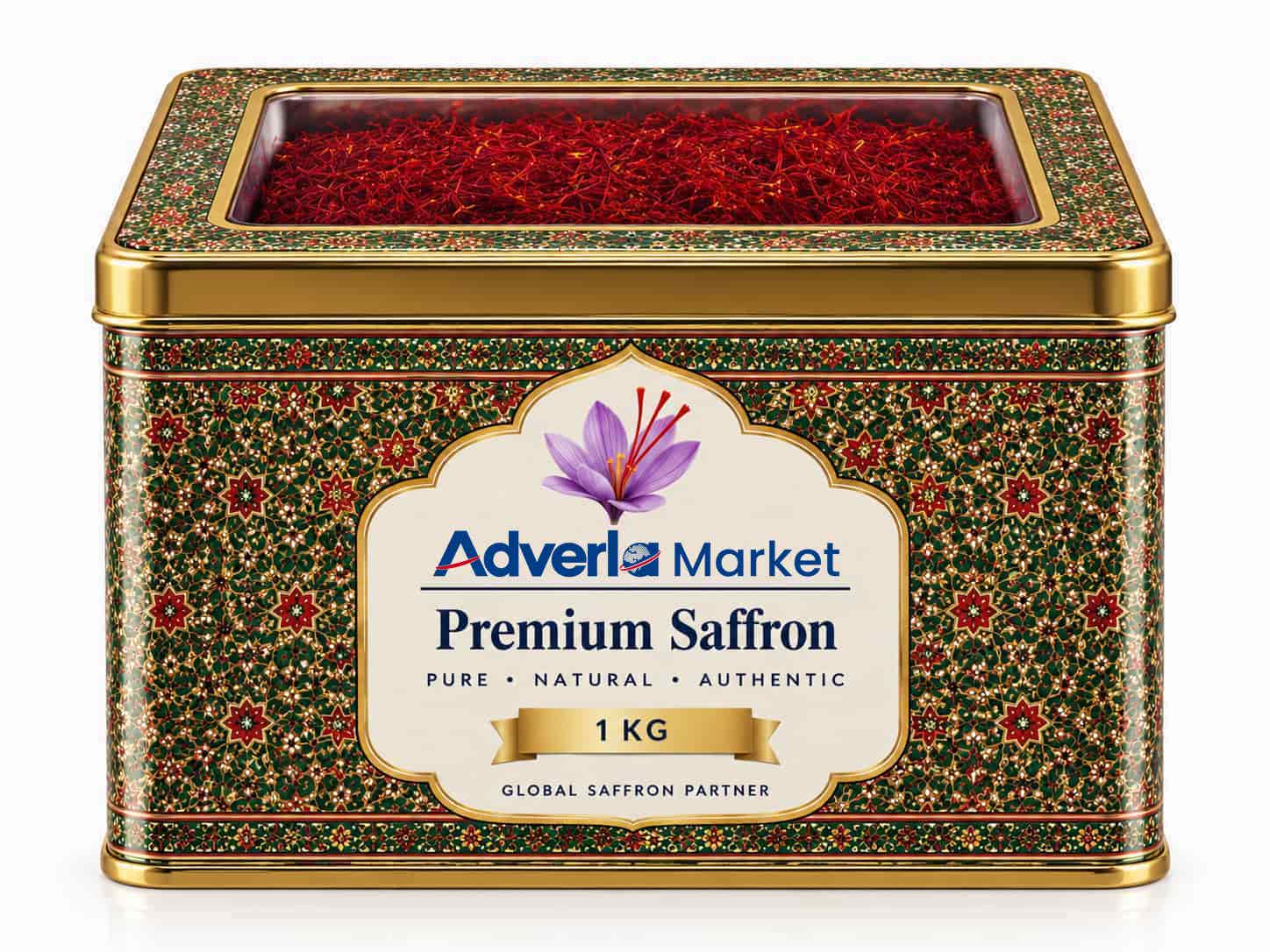
Our range: Adverla Market supplies Grade 1 whole red threads, stigmas only, in 250 g, 500 g and 1 kg wholesale packs. See the packs.
How saffron quality is measured
Colour, taste and aroma can be measured in a laboratory. The ISO 3632 standard turns those numbers into three categories.
| Parameter | What it shows | ISO 3632 Category I |
|---|---|---|
| Colouring strength (crocin) | How strongly the saffron colours food | 190 or higher |
| Bitterness (picrocrocin) | The characteristic saffron taste | 70 or higher |
| Aroma (safranal) | The floral, honey-like fragrance | 20 to 50 |
| Moisture | Shelf life and brittleness | 12% or lower (whole threads) |
Reference minimums for Category I from ISO 3632. Always confirm against the certificate of analysis for the specific batch.
What to ask any saffron supplier for
- A certificate of analysis showing crocin, picrocrocin and safranal values
- Moisture level and the ISO 3632 category
- Batch code, packing date and origin on the label
- Stigmas only: no style, petals or foreign matter
- Sealed, light-proof packing
How Adverla Market handles quality
- Batch code and origin on every pack
- Vacuum-sealed foil packing
- Certificate of analysis available on request
- Sample orders for serious buyers
How to tell real saffron from fake
Saffron is expensive, so adulteration is common. These four quick checks help you spot problems.
1. Check the look
Real threads are dark red and trumpet-shaped, wider at the tip. They should not look perfectly even or unnaturally shiny. Yellow or white parts mean style has been left in.
2. Cold-water test
Drop a few threads into cool water. Real saffron releases its golden colour slowly, over several minutes, and the threads stay red. Dyed threads colour the water at once and turn pale.
3. Smell it
Genuine saffron smells floral and honey-like, with a hint of dry hay. A sharp chemical, musty or oily smell is a warning sign.
4. Feel it
Threads should be dry and brittle. Press them between your fingers: sticky or greasy threads may have had oil or syrup added to increase weight.
Signs of genuine saffron
- Slow, steady colour release
- Threads keep their shape and colour
- Floral, honey-like aroma
- Dry, brittle, flexible-snap threads
- Traceable batch and laboratory report
Red flags
- Colour that bleeds instantly in water
- A price far below the market
- Uniform, glossy red with no tips
- No batch code, origin or analysis report
- Damp, heavy or oily threads
Home tests are only a guide. Saffron can be adulterated in ways the eye and nose cannot detect, so a laboratory analysis (ISO 3632) is the only definitive proof of quality.
Saffron and wellbeing
Saffron has a long history in traditional medicine, and modern studies have started to look at it more closely.
Mood
Small clinical studies have looked at saffron extract for low mood and mild depression, with encouraging but early results.
Memory and focus
Early research has explored saffron’s effect on memory and cognitive function, mostly in older adults.
Antioxidants
Saffron contains crocin, safranal and other plant compounds with antioxidant activity.
Heart health
Some studies have examined links to blood pressure and circulation. The evidence is still limited.
Information only, not medical advice. Culinary amounts, around 0.1 g a day, are generally regarded as safe. Very large amounts (several grams) can be harmful, and pregnant women should avoid medicinal doses. Speak to a doctor before using saffron for a health purpose.
How to use saffron
Bloom saffron before you cook with it, and you will get the most colour and aroma from every thread.
Crush
Grind a pinch of threads with a pinch of sugar or salt in a mortar to a fine powder.
Steep
Add 3–4 tablespoons of warm (not boiling) water or milk and leave for 10–15 minutes until deep golden.
Add
Stir the liquid into rice, stews, desserts or drinks near the end of cooking to keep the aroma.
| Dish | Saffron guide |
|---|---|
| Rice, biryani, pilaf (4 servings) | About 0.1 g |
| Stews and sauces (4 servings) | About 0.1 g |
| Milk puddings and ice cream (4 servings) | 0.05 to 0.1 g |
| Bread and baking (500 g flour) | 0.1 to 0.2 g |
| Tea or warm milk (per cup) | 3 to 5 threads |
Saffron is strong: more is not better. Too much makes a dish bitter and medicinal.
A buyer’s guide to importing saffron
Six steps to take a saffron order from specification to delivery.
Define the specification
Agree the grade, ISO 3632 category, pack size and labelling before you order.
Review a sample
Request a sample and a certificate of analysis, and check the colour strength, moisture and packing.
Agree commercial terms
Confirm price, payment terms and shipping terms (Incoterms such as FCA, FOB, CIF or DAP).
Prepare documents
Invoice, packing list, certificate of origin and, where required, analysis and phytosanitary certificates.
Choose the freight
Air freight suits small, urgent orders; sea or road suits larger volumes. Saffron is light and high-value.
Clear customs
Saffron is classified under HS code 0910.20. Check your country’s food-safety, labelling and import rules.
Common pitfalls
- Buying loose bulk with no batch code or origin
- Accepting a grade without a laboratory report
- Moisture too high, which spoils colour and aroma in transit
- Weak or non-sealed packing that lets aroma escape
- Ignoring local labelling and import rules
Good practice
- Branded, labelled, batch-coded packs
- A written specification for every order
- Vacuum-sealed foil, then export cartons
- Documents prepared before shipping
- One supplier who can repeat the same grade
Choose your pack size
The same Grade 1 saffron in three wholesale sizes. Compare them on the saffron page.
Saffron questions, answered
Why is saffron so expensive?
Saffron is harvested entirely by hand. Each Crocus sativus flower gives only three red stigmas, and roughly 150,000 flowers are needed for 1 kg of dried saffron. The short autumn harvest, careful drying and grading add to the cost.
What is the difference between Negin, Sargol, Pushal and Dasteh?
Negin is the longest, thickest all-red thread. Sargol is the red tip only, cut short. Pushal keeps a little of the pale yellow-cream style, and Dasteh is a bunch of threads tied with the style attached. Colouring strength per gram is highest for Negin and Sargol.
What does ISO 3632 mean for saffron?
ISO 3632 is the international standard for saffron. It sets three quality categories (I, II, III) based on laboratory measurements of colouring strength (crocin), bitterness (picrocrocin) and aroma (safranal), plus moisture and purity limits.
How can I tell real saffron from fake saffron?
Look for deep red, trumpet-shaped threads, a honey-like floral aroma, dry non-greasy threads and colour that releases slowly into cool water while the threads stay red. Home tests are only a guide; a laboratory analysis is the only definitive proof.
How long does saffron keep its quality?
Sealed in foil and stored cool, dry and dark, saffron typically keeps its quality for up to 24 months. Once opened, keep it airtight and use it within a few months for the best aroma.
How much saffron should I use per dish?
About 0.1 g, a generous pinch, is enough for four servings of rice or a stew. Crush it, steep it in warm water or milk for 10–15 minutes, then add the liquid to the dish.
Is saffron safe to eat every day?
Culinary amounts are generally regarded as safe. Very large amounts, several grams in one day, can be harmful, and pregnant women should avoid medicinal doses. This page is information only and is not medical advice.
Can businesses import small quantities?
Yes. Our wholesale range starts at a 250 g pack, with 500 g and 1 kg packs and custom orders above 1 kg. Contact us with your quantity and destination for a quote.
Have a question or need a quote?
Send us your product, quantity and destination and we will reply within one business day.